James D. Vogt
Imperial College London • Sr. Information Architect • imperial.ac.uk
About
As a top tier university, Imperial College London is often known as the MIT of Europe.
Responsibilities:
- Information Architecture
- Wireframe lead
- Participatory design
- Usability testing lead
- Production lead
Awards:
IMA - Outstanding Achievement
CASE - Gold Award
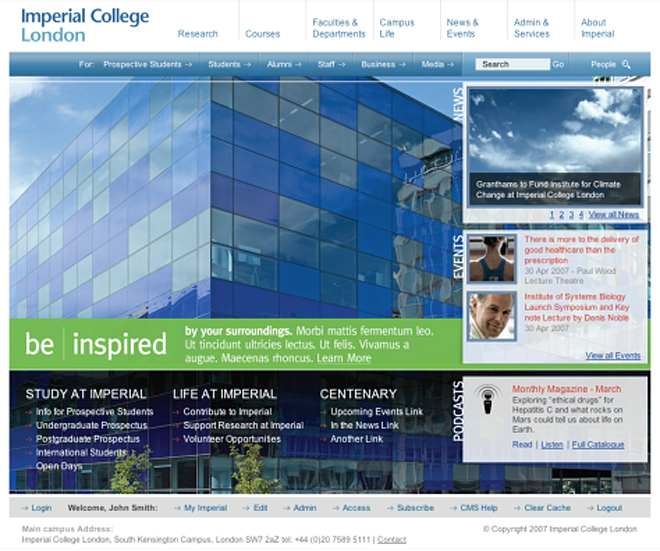
Landing Pages
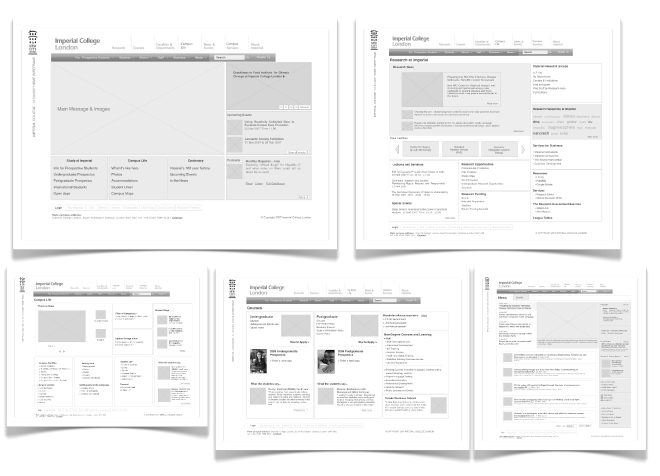
When Imperial asked us to evaluate their existing site, one of the things that stood out the most was a lack of good landing pages. What was there just didn't adquetely tell the Imperail story or offer users the affordances they needed. We based the new pages on the activities users would want to do, based on our research. (see below)
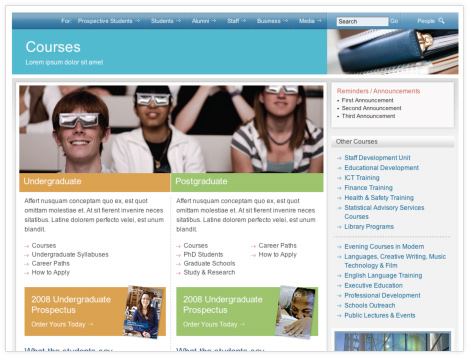
And yes, students are actually interested in the courses they'll be taking. :)
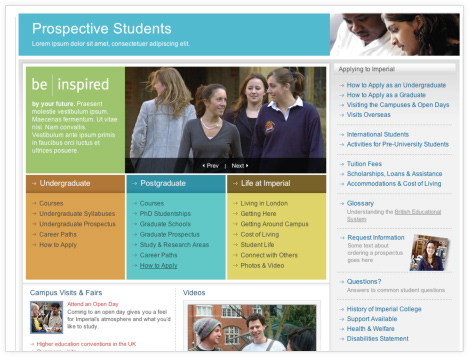
What's it like?
We heard this question over and over in our user research from prospective students. Many of these students would be traveling abroad for the first time when they attended school in London. They wanted to get a sense of place. We designed student pages to demonstrate how vibrant their new lives would be.
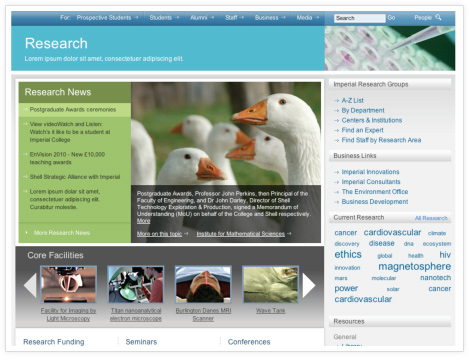
Showing not telling
In digging around the previous site, we found all kinds of content gold nuggets - The problem was they were all over the place. By assembling all the geeky toys in a "Core Facilities" carousel, we were able to show visitors the breadth of Imperial's tools and their dedication to discovery. Who wouldn't want to play with a wind tunnel or a wave tank?
Architecture
One of our biggest challenges was organizing the navigation for such a large university. How do you create an architecture that can support hundreds of thousands of pages and accommodate the needs of various departments?
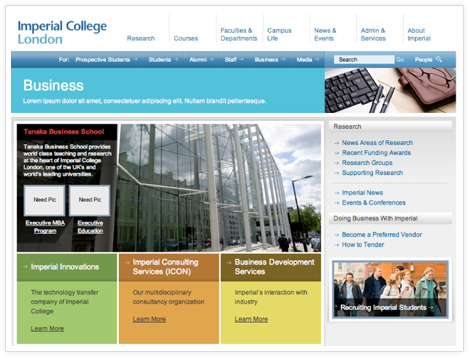
For Imperial, the global navigation leads to the major landing pages based on tasks or audience. We then used content "blocks" to uniquely show off departmental pages, in this case, the school of business.
Behind the Scenes
Case study
Want to see more process? I wrote this case study that documents the research and methodology we used on the project.
Download PDF (5.4MB)
Mental Models
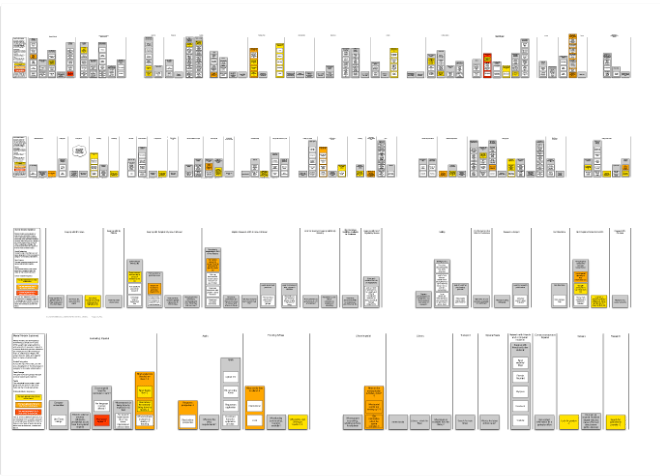
We conducted 39 interviews of students, faculty, counselors and staff of the website and captured the data in mental models.
Participatory Design
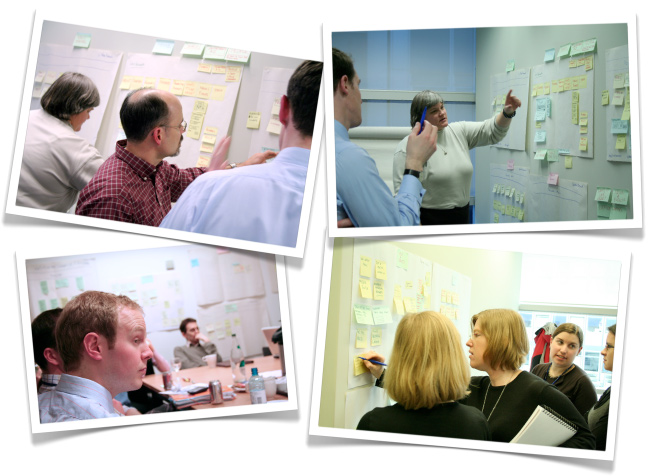
We took post-it notes of tasks and ideas and stuck them to the new landing pages all around the room with users and stakeholders. Indi Young used this photo I took in her book.
Wireframes
I was the lead in the creation of wireframes and navigation for the site. These went through numerous iterations and I found the mental models indispensable in their creation.